

If you self-fund, your specific stop-loss deductible is the single largest risk-transfer decision on the plan. It determines how much of every catastrophic claim lands on your balance sheet before anyone else pays a dollar. And for most mid-market employers, it was not chosen. It was inherited, carried forward from the year the plan converted and nudged upward whenever the renewal got ugly.
That was survivable when million-dollar claims were rare. It is not survivable now.
This is a working guide to setting the number. What you are actually buying, what the 2026 claims data says about the risk you are absorbing, the contract terms that quietly move your real attachment point, and the questions to put in front of your carrier before you sign.
Start Here: What You Are Actually Buying
Stop-loss is not health insurance. It is reinsurance on your own plan. Two layers, two different jobs.
| Layer | What it protects | How the threshold is expressed |
| Individual / Specific (ISL) | Any one claimant running catastrophic. One premature birth. One leukemia diagnosis. One gene therapy. | A flat dollar deductible per covered person, per contract year. Commonly $75,000 to $300,000 in the mid-market. |
| Aggregate (ASL) | Everyone at once. A bad year across the whole population rather than one bad case. | A percentage of expected claims, typically 125%. You fund up to the corridor before the carrier steps in. |
Specific is the layer that keeps a CFO awake. Aggregate is the layer that gets ignored until the year it matters. Most mid-market plans carry both, and most employers can tell you their ISL number but not their aggregate attachment factor (if that is you, you are in good company, and we will come back to it).
The 2026 Numbers That Should Reset Your Assumptions
Before you pick a threshold, understand the distribution you are picking it against. The last four claim years have moved in one direction.
| +46% Increase in the frequency of million-dollar-plus claims, 2022 to 2026 Sun Life, High-Cost Claims & Injectable Drug Trends (2026) | 49% Of self-funded plan sponsors now report at least one $1M+ claim, up from 23% Aegis Risk Medical Stop-Loss Premium Survey |
| ~20% Year-over-year rise in members exceeding $200,000 in annual claims per 10,000 employees QBE North America, 2026 Accident & Health Market Report | 13-20%+ Stop-loss premium increases employers are seeing at renewal Gallagher, via BenefitsPRO (June 2026) |
Three details inside that data matter more than the headlines:
The severity is concentrating at the top. Sun Life's 2026 report, built on more than 70,000 high-dollar claims from over 3,300 self-funded employers, found that blood cancers produced the highest multimillion-dollar claims, averaging $5.45 million in 2025. The single largest leukemia claim approached $8 million. The costliest drug treatment in the dataset was Elevidys, a gene therapy for Duchenne muscular dystrophy, at an average of $3.6 million per course.
The frequency is climbing right where mid-market deductibles sit. QBE's 2026 market report found neoplasm claim severity at the $200,000 deductible level rose 12% over the prior-year average, while frequency at that level climbed nearly 30%. Birth-related claim frequency more than doubled between 2024 and 2025. If your ISL is $150,000 or $200,000, that is not background noise. That is your layer.
The tail keeps stretching. Aegis now reports that one in six plan sponsors has seen a $3 million claim. A $3 million claim used to be a story people told at conferences. It is becoming a line item.
A high-cost claimant is no longer an outlier event you insure against. It is a recurring feature of a mid-market population that you have to price, fund, and plan for.
The Four Details That Help You Pick The Right Number
Not one of these is "what did the carrier quote."
1. Group size and claim credibility
The smaller the population, the less predictable the distribution and the more a single claimant distorts the year. A 120-life group and a 900-life group with the same expected PEPM are not carrying the same volatility, and they should not carry the same deductible. Larger groups can hold more retention because statistical smoothing works in their favor. Smaller groups cannot buy their way out of volatility with a high deductible. They just move the volatility onto the balance sheet.
2. Your actual claims distribution, not the market average
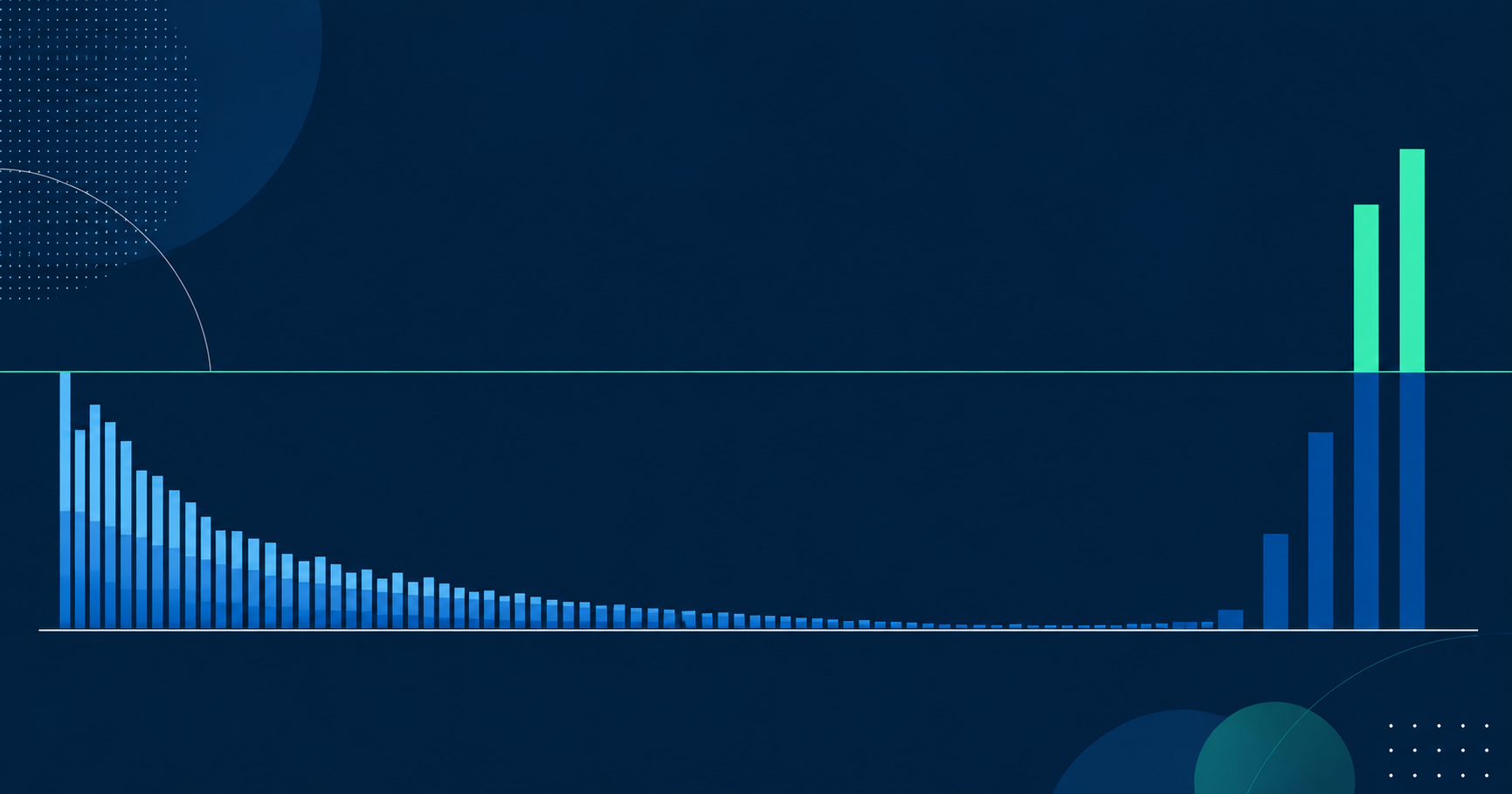
Pull three years of claimant-level data and count how many members landed in each band: $50k-$100k, $100k-$200k, $200k-$500k, $500k+. That histogram is your attachment point analysis. Everything else is commentary. Segal's national dataset found that claimants with $250,000 or more in annual paid claims represent under 1% of covered individuals but roughly 15% of total medical and pharmacy spend. Your version of that number is knowable, and it should be the basis of the decision.
3. Balance-sheet tolerance, stated as a hard dollar figure
Answer this before you look at a single quote: what is the maximum dollar amount of unbudgeted claim spend this company can absorb in a bad year without changing how it operates? Not what it would prefer. What it can survive. That number is the ceiling on your retained risk, and it belongs to the CFO, not the broker.
4. The premium-versus-retention trade, run as math
Raising your deductible always lowers the premium. That is not the question. The question is whether the premium you save is larger than the additional claim dollars you now expect to eat inside the new layer.
Run the Retained Layer Test
Here is the test in practice. The figures below are illustrative, chosen for clean arithmetic, not benchmarks. Your actual PEPM depends on demographics, geography, industry, and experience.
Take a 250-employee self-funded group weighing a move from a $100,000 ISL to a $200,000 ISL.
| Option A: $100,000 ISL | Option B: $200,000 ISL | |
| Specific premium (illustrative) | $180 PEPM = $540,000/yr | $115 PEPM = $345,000/yr |
| Annual premium saved by moving to Option B | $195,000 | |
| New corridor you now self-fund | Every dollar between $100,000 and $200,000, on every claimant | |
Now cost the corridor using the group's own history. Say the last three years averaged five claimants above $100,000: three of them ran past $200,000, and two landed around $140,000.
- The three claimants above $200,000 each cost you an additional $100,000 under Option B. That is $300,000.
- The two claimants at roughly $140,000 cost you an additional $40,000 each. That is $80,000.
- Expected additional retained claims: $380,000. Premium saved: $195,000.
Option B loses by roughly $185,000 a year. The cheaper premium is the more expensive decision, and you only see that if you cost the layer instead of comparing the quotes.
Reverse the population and the answer reverses with it. A group with one claimant a year clearing $100,000 and none clearing $200,000 is paying a large premium to insure a corridor almost nobody enters. That group should raise the deductible.
The test, stated plainly
Move the deductible up only when:
Premium saved > expected claim dollars inside the new corridor, and the worst realistic year inside that corridor still fits under the CFO's hard dollar ceiling.
The Contract Terms That Shift Your Attachment Point
This is where mid-market employers get hurt, and it is the part almost nobody reads. Your effective attachment point is not just the number on the first page. It is the number after the contract mechanics are applied.
Contract basis (12/12, 12/15, 24/12, paid)
A 12/12 contract covers only claims incurred and paid inside the same 12 months. A claim incurred in November and paid in February may fall into no one's coverage. Paid contracts are the cleanest. Every step away from paid is a step toward a gap, and carriers discount premium precisely because the coverage is narrower. Cheap premium on a 12/12 is not savings. It is a deductible you did not know you bought.
Run-in and run-out limits
When you change carriers, the claims incurred under the old contract but paid under the new one need a home. Confirm in writing which contract picks them up. This is the most common way a clean-looking marketing exercise creates a six-figure uncovered claim on your largest, longest-running case.
Aggregating specific deductible (ASD)
An ASD lowers your per-person deductible but stacks a second, pooled deductible on top: you might get a $100,000 specific with a $150,000 aggregating specific, meaning you absorb the first $150,000 of the total excess across all breaching claimants before reimbursement starts. It is a legitimate tool for cash-flow-strong employers who want cheaper premium. It is also a way to think you bought a $100,000 attachment point when your first real dollar of recovery is much further out.
Lasers and the no-new-laser provision
A laser is a higher deductible applied to one identified claimant. Your group is at $200,000; the member with a known transplant history is set at $600,000. The first $600,000 of that member's claims is yours.
Lasers are increasingly common as carriers get better at reading your data. Three responses: accept the laser and fund it, buy it out with additional premium, or market the risk to a carrier willing to take the member at the standard level. What you cannot do is treat it as a footnote. A single laser can create a six-figure gap between your assumed exposure and your actual exposure.
And ask for the no-new-laser provision at renewal, along with the rate cap that usually rides with it. Those two clauses together are often worth more than a few points of premium.
The gap that shows up after you switch
Terminal liability. If you leave a carrier and your contract does not extend to claims incurred but not yet paid, that run-out sits on your plan with no reinsurance behind it. Run-out provisions vary carrier to carrier: some cover 12 months, some cover nothing. Confirm it before you move, not after.
The Aggregate Corridor You Have Not Looked At
Aggregate stop-loss caps total plan claims, usually at 125% of expected. The math is simple: expected annual claims times 1.25. Everything below that line is yours.
For a group with $3 million in expected claims, the aggregate attachment sits at $3.75 million. That means a bad year can cost you $750,000 above budget before the aggregate policy pays anything. The question is not whether the corridor is standard. It is whether your cash reserves and credit facility can absorb a bad run.
Aggregate matters most for smaller groups, where two or three large claimants can swing total plan cost by 30% in a year. For a 500-life group, statistical smoothing makes an aggregate breach genuinely unlikely, and the coverage is closer to a formality. Know which one you are before you dump a bunch of money into it.
One structural note worth understanding: aggregate typically only counts claims up to your specific deductible. Amounts above the ISL that the specific policy reimburses do not accumulate toward the aggregate. Employers routinely misread this and assume they have more protection than they have bought.
Your Pre-Renewal Checklist
Stop-loss renewal work should start 120 days before the effective date. Not 30. By 30 days, you are accepting terms, not negotiating them.
120-180 days out: build the fact base
- ✓ Pull 36 months of claimant-level data and build the distribution histogram by dollar band.
- ✓ Identify every claimant currently trending above 50% of your ISL. These are your laser candidates. Your carrier already knows who they are.
- ✓ Get the CFO's hard dollar ceiling for unbudgeted claim spend.
- ✓ Confirm your current contract basis, ASD (if any), run-in/run-out, and any active lasers.
90-120 days out: model the options
- ✓ Price at least three ISL levels, not two. Two options invite a coin flip; three reveal the curve.
- ✓ Run the Retained Layer Test at each level against your own claim history.
- ✓ Model the worst realistic year at each level, not the expected year, and check it against the CFOs maximum.
- ✓ Price the aggregate corridor as a cash requirement, not an insurance product.
60-90 days out: negotiate the terms, not just the rate
- ✓ Ask for the no-new-laser provision and the renewal rate cap in the same conversation.
- ✓ Quantify the buyout premium on any existing laser and compare it to the retained exposure.
- ✓ Confirm terminal liability and run-out coverage in writing before entertaining a carrier change.
- ✓ Verify how specialty pharmacy and gene therapy are treated under the contract, including any carve-outs or separate accumulators.
Four questions to ask your carrier or broker:
- At this attachment point, how many members do you statistically expect to breach it?
- What is the modeled probability of a single claim exceeding $1 million, and exceeding $3 million, in our population?
- How does our pharmacy trend impact expected claim frequency at each ISL option you have quoted?
- What exactly is covered, and what is excluded, if a member is approved for a cell or gene therapy mid-contract?
Where Mid-Market Employers Get Burned
Five patterns, in rough order of how expensive they turn out to be.
- Buying the premium, not the layer. Choosing the deductible that produces the lowest quote without ever costing the corridor you just took on. This is the mistake that fails the Retained Layer Test above, and it is the most common one on the list.
- Letting the number sit still while trend moves. A $200,000 attachment point set in 2022 does not protect what it protected in 2022. With medical trend running near 9% and pharmacy at 11% to 12%, your claims retention and premium have been growing every year you kept it flat. Carriers reprice for leveraged trend annually. Your retention analysis should too.
- Reading the rate and skipping the contract. Contract basis, aggregating specific deductibles, and run-out terms can move your effective attachment point by six figures. They are not fine print. They are the product.
- Treating a laser as an administrative note. Every laser is a funded liability. Model it, price the buyout, or shop it.
- Setting the deductible so low the carrier becomes your claims administrator. A $50,000 or $75,000 ISL on a healthy mid-market group means you are paying catastrophic-level pricing to insure predictable large claims. You can budget for a $75,000 claim. You cannot budget for a $3 million one.
The Decision Underneath the Decision
Self-funding is a bet that you can manage your own risk better than a carrier will price it for you. The attachment point is where you declare how much of that bet you are actually willing to hold.
The market has made that declaration harder. Level-funded arrangements alone now cover 37% of workers at firms with 10 to 199 employees, per KFF, which means far more small and mid-market employers are exposed to stop-loss volatility than were a decade ago. They are exposed at exactly the moment claim severity is accelerating. More employers holding the risk. Bigger claims arriving. Premiums up mid-teens or worse.
None of that argues for retreating from self-funding. It argues for doing the analysis that self-funding always assumed you were doing. Pull the data. Build the histogram. Price your exposure. Read the contract. Then set the number, on purpose, with a reason you can defend to your CFO.
Let's put a number behind your number.DSP's employee benefits team runs claims distribution analysis, stop-loss contract review, and retained-risk modeling for mid-market self-funded and level-funded employers. If your renewal is inside 120 days, or you have never seen your own claimant histogram, that is the conversation to have. Talk to Our Benefits Team Explore Employee Benefits Or call 847-934-6100 | info@dspins.com |
Sources
- Sun Life U.S., High-Cost Claims and Injectable Drug Trends report (May 2026). Million-dollar-plus claim frequency +46% from 2022 to 2026; blood cancers averaged $5.45M in 2025; Elevidys averaged $3.6M.
- QBE North America, 2026 Accident and Health Market Report, as reported by Insurance Business (June 2026). Neoplasms account for 36% of stop-loss claim reimbursements; frequency of members exceeding $200,000 per 10,000 employees up nearly 20% year over year.
- Aegis Risk Medical Stop-Loss Premium Survey. 49% of plan sponsors report $1M+ claims, up from 23%; one in six report a $3M claim.
- Segal, Medical Stop-Loss Premiums Increase Nearly 10 Percent. Claimants at $250,000+ represent under 1% of covered individuals and about 15% of total medical and pharmacy spend.
- Allison Bell, Health stop-loss increases keep slamming employers, BenefitsPRO (June 22, 2026). Gallagher reports stop-loss increases in the mid-teens, in some cases above 20%.
- Business Group on Health, 2026 Employer Health Care Strategy Survey. Median health care cost trend of 9% for 2026; pharmacy costs forecast up 11% to 12%.
- KFF, 2025 Employer Health Benefits Survey. 37% of covered workers at firms with 10 to 199 employees are covered by a level-funded plan.
This article is for educational purposes and reflects general market conditions as of July 2026. It is not tax, legal, actuarial, or insurance advice. Stop-loss contract terms, pricing, and availability vary by carrier, group, and state. Consult a licensed professional for guidance specific to your plan. The premium and claim figures in the worked example are illustrative and chosen for arithmetic clarity, not benchmarks.



.jpeg)